Service Architecture

Structured renewable energy services for Enphase system planning

Enphase service work starts with the actual energy behavior of the site, not a generic product list. Our process helps installers, developers, and asset operators connect solar generation, battery storage, microinverter layouts, EV charging growth, and monitoring expectations into one practical technical pathway. The goal is to reduce redesign loops, reveal missing BOS details early, and make the final equipment conversation easier for purchasing, installation, and long-term service teams.

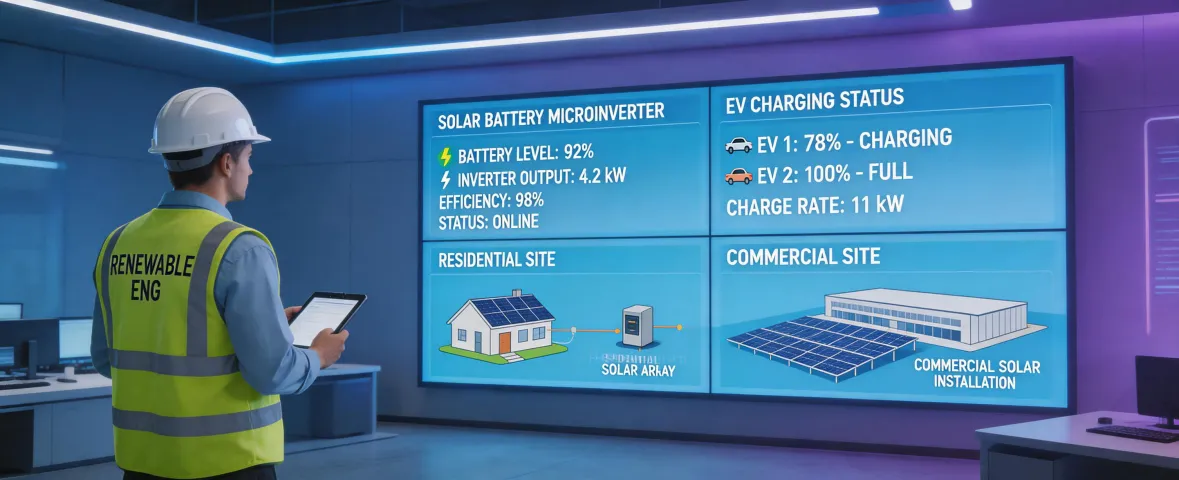
Engineer reviewing Enphase energy dashboard
Service Tracks

Three connected lanes from concept to lifecycle visibility

01

System Design Review

We review the electrical objective, roof or site conditions, backup priorities, and product category fit. This includes battery storage sizing assumptions, microinverter layout logic, EV charger load expectations, and monitoring requirements that should be visible before procurement starts.

02

Commissioning Support

Installers receive a practical readiness checklist for gateways, branch circuits, communications, labeling, and owner handoff. The service emphasizes clean data capture so production, consumption, and storage behavior can be verified without slow field escalation.

03

Portfolio Monitoring Guidance

For repeat programs, we help teams define alert priorities, maintenance thresholds, and reporting language. The result is a monitoring structure that supports homeowner satisfaction, service dispatch decisions, and long-term renewable asset performance.

Process Timeline

A numbered service path with clear decision gates

1

Capture site intent

Share load profile, backup expectations, available roof or ground area, interconnection notes, and any required product categories.

2

Map energy flows

We outline how solar, battery, EV charging, and monitoring data should interact during normal operation and outage conditions.

3

Resolve equipment fit

Microinverter, battery, BOS, and control choices are checked against the project objective, installation sequence, and service model.

4

Document next actions

The final note gives purchasing and field teams a concise list of open points, preferred pathways, and commissioning considerations.

Every recommendation is tied to an operational assumption

We do not present a battery, microinverter, charger, or monitoring option as isolated hardware. Each service output states the site condition, control objective, and ownership responsibility behind the recommendation. That makes the conversation easier to review internally and easier to adapt when utility rules, backup priorities, or load forecasts change.

Start a Service File

Send a site brief and receive a cleaner energy system path

A short project note is enough to begin. Include location, building type, battery objective, solar capacity target, EV charging plan, and the people who will operate the system after commissioning.

Please enter your name.
Please enter a valid email.
Please describe the site, load profile, or procurement target.
Consent is required before submission.