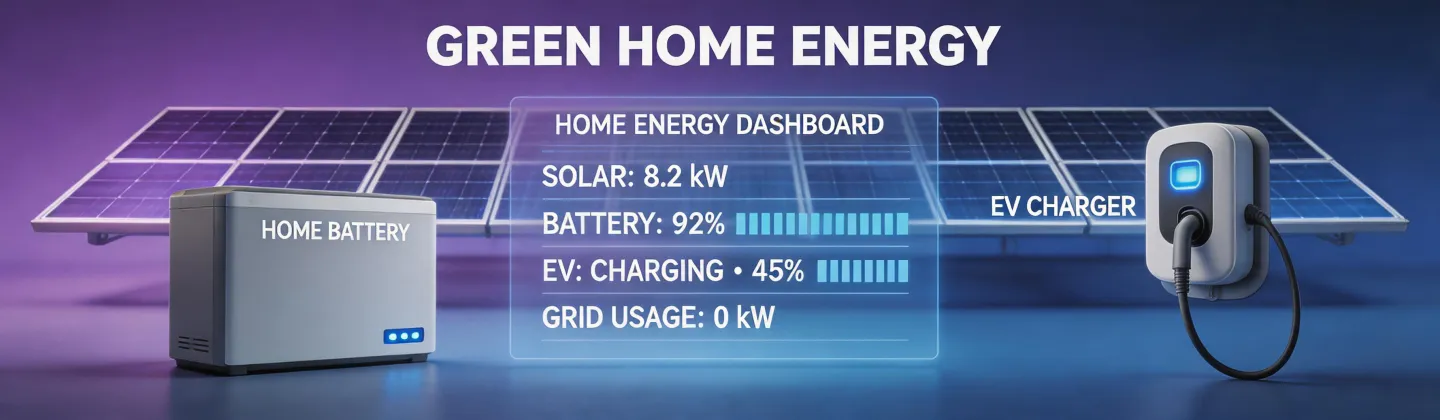
When Your Emergency Order Meets the Smart Meter: What I've Learned from 47 Rush Solar Installations
Posted on 2026-05-21 by Jane Smith
The Call That Changes Your Weekend
It's 3:00 PM on a Friday. A client needs their new Enphase system—microinverters, an IQ Battery, the whole package—fully commissioned by Monday morning. Their smart meter is already installed, and they want the EV charger integration to work, too. 'No problem,' they say, 'the hardware's all here.'
I've taken this call before. More times than I'd like.
In my role coordinating commercial solar deployments for a mid-sized installer, I've handled 47 rush orders in the last 18 months (as of Q1 2025). That's not counting the ones we had to decline. The on-time delivery rate for those 47? Just over 91%. It sounds good until you remember that the 9% that missed meant paying out penalty clauses, eating rush shipping costs, and losing a client's trust. Sometimes all three.
Everything I'd read about solar installation planning said 'order everything first, then schedule the install.' The conventional wisdom is that hardware availability is the bottleneck. My experience suggests otherwise. The real bottleneck isn't the panels or the inverter. It's the grid interconnection—specifically, how your shiny new system talks to the smart meter that's already on the wall.
Here's what I've learned from getting burned. Twice.
The Surface Problem: 'I Need It Tomorrow'
Every rush order sounds the same. The client has a deadline. Maybe it's a tax credit deadline, a net metering policy change, or a commercial tenant moving in. The question is always: 'Can you get it done by [DATE]?'
I used to answer that question based on one metric: is the hardware in stock?
If the warehouse had the Enphase IQ8 microinverters and the IQ Battery 5P (or the Encharge 10, depending on the spec), I'd say yes. We'd rush the crew, push the permit, and hope for the best. That approach worked exactly until it didn't. When we missed a $50,000 penalty clause in March 2024 because we couldn't get the smart meter CT (current transformer) installation certified in time, I realized my framework was broken.
The client's real problem wasn't 'I need hardware installed next week.' It was 'I need my system to export to the grid and my EV charger to work on Tuesday.' Those are two very different problems.
The Deep Layer: Smart Meter Integration Isn't 'Plug and Play'
Most homeowners and even some commercial buyers assume that a smart meter is a smart meter. It measures your consumption, sends data to the utility, and that's that. The reality is messier.
When you install an Enphase system with an IQ Battery, the system uses consumption CTs (current transformers) to monitor real-time usage. This data is critical for the battery to function properly—deciding when to charge, when to discharge, and how to avoid backfeeding the grid. If the smart meter's configuration doesn't align with the Enphase CT setup, you get ghost loads, incorrect state-of-charge readings, and in the worst case, the system refuses to export.
We didn't have a formal process for verifying smart meter compatibility before install. Cost us when a client's utility had a proprietary meter that used a different communication protocol than the standard Zigbee-based setup we assumed.
I've since created a pre-install checklist that covers:
- Meter model and manufacturer—not just 'smart meter'
- CT installation verification—are the clamps fitted correctly on the correct phases?
- Utility approval status—does the utility require a separate inspection for the smart meter?
- Net metering agreement terms—some utilities limit export to a certain percentage of capacity
Should have done it after the first time we got flagged in an inspection. It was that obvious in hindsight.
The Hidden Cost of 'I'll Figure It Out Later'
Here's a trap I've fallen into more than once. A client hears 'Enphase EV charger' and assumes that because it's from the same brand as the inverter and battery, it'll just work. And technically, the hardware does. The Enphase IQ EV Charger is a Level 2 smart charger that integrates natively with the Enphase App. It can do bidirectional (V2H) charging. It's a solid piece of gear.
But 'works with Enphase' doesn't mean 'works with every smart meter.'
We had a job in late 2024 where the client specifically wanted the Enphase EV charger—they wanted to charge their Mercedes-Benz EV using excess solar production. The system was designed, the equipment was ordered, and we installed everything in a day. Then we tried to commission it.
The smart meter (a Landis+Gyr model common in that region) didn't support the same export limiting commands that the Enphase gateway expected. The result? The charger would only pull from grid power during certain hours, not from the battery, defeating the entire purpose of load shifting.
Looking back, I should have checked the meter's compatibility with the Enphase EV charger's control protocols before ordering. At the time, I assumed 'it's all Enphase, it'll work.' The client and I spent three weeks coordinating with the utility to get a metering firmware update. The system has worked perfectly since, but those three weeks cost us our 'express install' reputation with that referral network.
The Wind Turbine Wild Card
Not every renewable energy system is rooftop solar. A surprising number of my emergency calls involve hybrid installations—solar plus a small wind turbine. The question 'How long does a wind turbine last?' comes up often, usually after the turbine has failed.
Wind turbines used for residential or small commercial applications typically have a design life of 20 to 25 years. In practice, I've seen units fail as early as year 5. The issue isn't always the turbine itself. It's the power electronics. Many budget turbines use cheaper inverters that aren't designed to handle the variable frequency output from a wind generator. They fail, and when they do, the solar system—which is connected at the same AC bus—can get hit with voltage surges.
In one case, a failed turbine inverter took out the Enphase combiner box's surge protection device. The turbine was down, but the solar system also had to be derated until we replaced the SPD. That job turned a simple 'replace the turbine inverter' into a multi-day, multi-system repair. The client was not thrilled.
If you're pairing solar and wind, plan for the turbine to be the weak link. Budget for an inverter replacement at year 8, not year 20.
What I Wish I'd Known: The Pre-Rush Checklist
So how do you handle a rush order for an Enphase system with smart meter integration and EV charging WITHOUT getting burned?
I now have a mandatory 'pre-rush' conversation with every client who asks for expedited service. It's not fun. It slows down the initial 'yes.' But it has saved us from disaster more times than I can count.
The conversation covers four questions:
- What's the smart meter model? Send me a photo of the meter face. I need the manufacturer and model number.
- Have you confirmed the CT installation location with your utility? Some utilities require specific phases or locations for the Enphase CTs. Don't assume your electrician's preference is acceptable.
- Which EV charger? If it's an Enphase IQ EV Charger, I need to know if your vehicle supports bidirectional charging. If it's a Mercedes-Benz system, we need to check the charger's firmware version against Enphase's compatibility list.
- What's the deadline if something fails commissioning? This is the hardest question. If the system goes live but the battery won't export properly, can the client afford a week of troubleshooting? Most can't. That's why we maintain a buffer stock of common replacement parts—but that's a topic for another post.
The Bottom Line
Rush orders are a fact of life in this industry. Clients have deadlines, and we're here to help. But the difference between a successful rush job and a costly disaster often comes down to one thing: how well you understand the interface between your system and the utility's equipment.
The vendor who lists all integration requirements upfront—even if the total complexity looks higher—usually costs less in the end. I've learned to ask 'what happens if the smart meter rejects our CT setup?' before I ask 'how quick can we install?'
Simple. Done.

Jane Smith
I’m Jane Smith, a senior content writer with over 15 years of experience in the packaging and printing industry. I specialize in writing about the latest trends, technologies, and best practices in packaging design, sustainability, and printing techniques. My goal is to help businesses understand complex printing processes and design solutions that enhance both product packaging and brand visibility.
Ask for article context