Why Solar Battery Storage Is More About Integration Than Just Price Per kWh
Posted on 2026-05-22 by Jane Smith
I Thought a Battery Was Just a Battery
When I first got asked to look into solar battery storage for our office—well, for a few of the properties we manage—I made a classic rookie mistake. I assumed it was a commodity. I pulled up some search results on how much an Enphase solar battery costs, cross-referenced it with a few other brands, and figured I'd just pick the one with the best price per kWh. Simple, right?
Turns out, that approach is about as smart as choosing a vendor based on who has the shiniest brochure. I learned that the hard way. We almost locked ourselves into a system that would have been a nightmare to maintain. (Should mention: this was before I understood the difference between AC and DC coupling—a distinction that matters a lot more than I initially gave it credit for.)
The Surface-Level Question: "How Much Is an Enphase Solar Battery?"
Okay, so the obvious question everyone starts with is price. If you Google “how much is an enphase solar battery,” you’ll get a range. The Enphase 5P battery capacity is 5.0 kWh, and the all-in cost installed by a certified partner usually lands somewhere around $2,500 to $3,500 per unit (pricing is location-dependent and fluctuates; verify current rates with local installers).
But here’s the trap I almost fell into. I thought, “Great, I can compare this $/kWh against a Samsung battery storage unit or another stackable system.” On paper, a Samsung battery storage solution might look a few hundred dollars cheaper per kWh. In my experience, this is where the real problem hides.
The Hidden Problem: The Cost of Integration
The price you see for a battery is never the whole story. The deep issue isn't the cost of the battery itself—it's the cost of making it talk to everything else. For a commercial property, you're not just buying a battery. You're buying a power ecosystem.
Take my situation. We already had a solar array with string inverters. To add a standard DC-coupled battery, we would have needed a whole new inverter or a separate solar charge controller. That’s thousands in extra hardware and labor. The beauty—or the trap—of the Enphase ecosystem is that their microinverters and the AC-coupled IQ Battery are designed to work together seamlessly. You don't need a separate inverter for the battery. The installation complexity drops significantly.
I didn't see that at first. I was comparing battery prices, not system prices. Quote A for a generic battery was $8,000. Quote B from an Enphase partner was $12,000 for the battery plus microinverters. Looks like Quote A wins, right? Except Quote A didn't include the $3,000 in electrical work to rewire the panel and integrate the solar side. Total cost of Quote A: $11,000. Quote B: $12,000. Oops.
The Real-World Cost of Getting It Wrong
I have mixed feelings about proprietary ecosystems. On one hand, they lock you in. On the other, they just work. Let me tell you about the time we almost went with a system from a wind turbine installation company that was trying to expand into solar storage. Seemed like a good deal. They were offering a bundled price.
We did the diligence. I learned that a wind turbine installation company might understand AC power, but they don't always get the nuances of solar DC wiring and battery management system communications. The risk of a compatibility headache down the road felt too high. The vendor who can’t provide a proper integrated solution—or who relies on you to figure out the wiring between a Samsung battery and a third-party inverter—is going to cost you in lost productivity and future service calls.
Switching from a fragmented system to a unified one like Enphase would have meant ripping out half the gear. The cost of that mistake? Not just money, but the hassle of coordinating three different trades to fix it, and the downtime when the system went into fault mode. That's a credibility hit with my operations director. I didn't want to be the person who bought a cheap battery that stranded the building during a grid outage.
Why the Ecosystem Matters More Than the Spec Sheet
So, what does this mean for you? If you're a buyer for a commercial property evaluating energy storage, stop asking “How much is an Enphase solar battery?” and start asking “What does the complete, turnkey solution look like?”
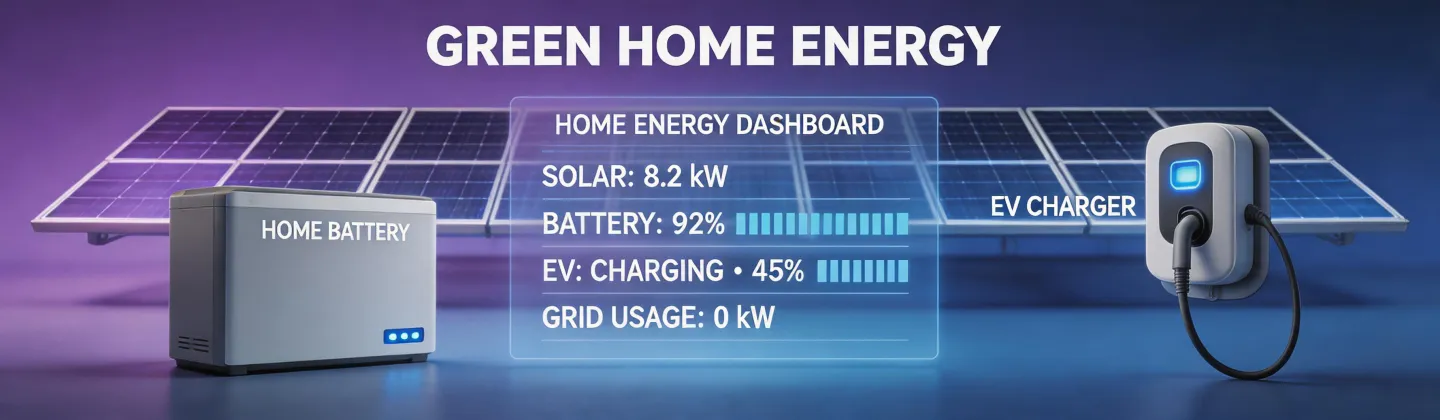
For example, if you're also thinking about how to start a EV charging station at the property, the compatibility question becomes critical. Enphase has its own EV charger, but even if you use a third party, their monitoring platform (Enphase Enlighten) can often track the whole home energy flow—solar, battery, and EV. That single-pane-of-glass visibility is a huge operational win. Samsung battery storage has its own monitoring, but mixing it with Enphase solar microinverters means two apps. The way I see it, that's a small headache that becomes a big one when you have to call support and figure out which system caused the glitch.
The Final Verdict: Quality as Brand Identity
In my opinion, choosing a solar battery isn't just about the hardware. It's about picking a partner whose ecosystem reinforces your professional image. A system that works flawlessly and can be monitored from one dashboard makes you look organized. A Frankenstein system that keeps failing makes you look like you cheaped out, even if you spent the same money.
The Enphase approach—with its microinverter-based architecture and AC battery—isn't the cheapest on the block. But the integration quality directly impacts how your building operates and how reliable your facility team appears. When I consolidated our vendor list for energy solutions, I went with the system that minimized complexity, not the one that minimized the upfront line-item on the quote. It’s a lesson that’s stuck with me: the easiest system to maintain is usually the best long-term investment.

Jane Smith
I’m Jane Smith, a senior content writer with over 15 years of experience in the packaging and printing industry. I specialize in writing about the latest trends, technologies, and best practices in packaging design, sustainability, and printing techniques. My goal is to help businesses understand complex printing processes and design solutions that enhance both product packaging and brand visibility.
Ask for article context